Home Blog Page 2

Lionel Messi and Inter Miami win MLS Eastern Conference final

0

Lionel Messi and Inter Miami have won the MLS Eastern Conference final.

Messi did not score but had an assist for Inter Miami as Tadeo Allende scored three goals, Mateo Silvetti one goal and Telasco Segovia one goal. Javier Mascherano’s Inter Miami lifted the MLS Eastern Conference trophy as they won 5-1 against New York City.

Tadeo Allende’s effort on goal gave Inter Miami the 1-0 lead. Moments later, Jordi Alba crossed it to Allende who scored a header and his second goal of the match.

With Inter Miami leading 2-1, Messi played a pass in to Mateo Silvetti nd he scored to give Inter Miami the 3-1 lead. Telasco Segovia would score the fourth for Inter Miami and Tadeo Allende would score a third for his hat trick.

Agustín Rossi wins Copa Libertadores with Flamengo

Agustín Rossi has won the Copa Libertadores with Flamengo.

Rossi lifted South America’s biggest club trophy in their 1-0 win against Palmeiras. The Argentine was the goalkeeper who kept the most clean sheets in this year’s Copa Libertadores, keeping nine clean sheets.

The 30 year old was one of Flamengo’s best players throughout the tournament, being a key figure in their penalty shootout win against Estudiantes and arguably their best player against Racing in the semi finals.

He is now the eighth Argentine to win a Copa Libertadores with a Brazilian team. Andrés D’Alessandro, Roberto Abbondanzieri and Pablo Guiñazú with Inter, Walter Kannemann with Gremio, Germán Cano with Fluminense and Thiago Almada and Alexand Barboza with Botafogo.

José Manuel López started the match for Palmeiras while Agustín Giay was substituted in for Palmeiras.

Gianluca Prestianni scores for Benfica in 2–1 win vs. Nacional de Madeira

0

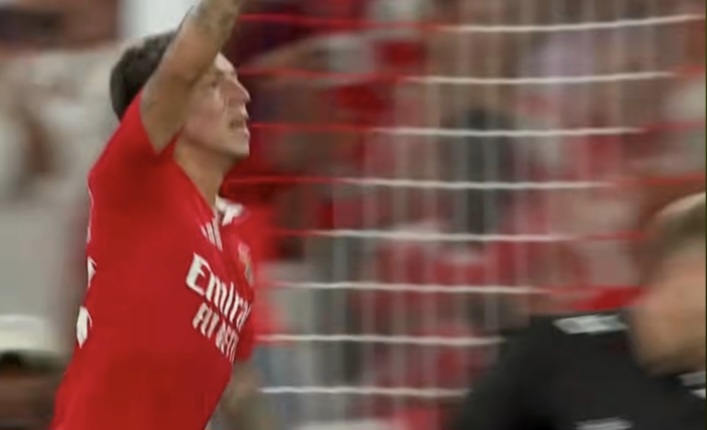
Argentine forward Gianluca Prestianni scored a decisive late goal in Benfica’s 2–1 comeback victory over Nacional de Madeira on Matchday 12 of the Primeira Liga.

Benfica were trailing 1–0 deep into the second half, but the Argentine produced the equalizer in the 89th minute. After receiving the ball on the right side of the box, Prestianni cut inside and struck a powerful low shot across the goalkeeper to make it 1–1. Minutes later, Vangelis Pavlidis completed the comeback with a goal in stoppage time.

Prestianni’s goal helped Benfica avoid another difficult result in a season marked by several tight matches. The Argentine attacker continues to earn minutes and importance under José Mourinho.

Two more Argentine players were part of the starting lineup: Enzo Barrenechea and Nicolás Otamendi, both featuring from the beginning for Benfica.

Aaron Anselmino scores his first goal for Borussia Dortmund in 2-1 win vs. Bayer Leverkusen

5

Argentine defender Aaron Anselmino scored his first goal in European football in Borussia Dortmund’s 2-1 win over Bayer Leverkusen on Matchday 12 of the Bundesliga. The former Boca Juniors centre-back opened the scoring in the 40th minute, rising in the box to meet a cross from Daniel Svensson and heading it past the goalkeeper for the 1-0 lead. It was his first goal for Dortmund and his first in Europe since arriving this season.

Anselmino continued his strong run of performances. Earlier in the week, he started and played all 90 minutes in the team’s 4-0 win over Villarreal, providing an assist in that match. Against Leverkusen, he once again completed the full match and is building rhythm as he aims to earn a call-up to the Argentina national team. During his time at Boca Juniors, he scored two goals across 23 matches — one against Trinidense in the Copa Sudamericana and another against Gimnasia in the Copa Argentina.

On the other side, Claudio Echeverri came off the bench for Leverkusen in the second half. The Argentine midfielder played 16 minutes after not featuring in midweek Champions League action, where Leverkusen had beaten Manchester City.

All you need to know about the Verón–Tapia–Milei conflict shaking Argentine football

1

Tensions inside Argentine football escalated again after the AFA Disciplinary Tribunal issued a six-month suspension to Estudiantes president Juan Sebastián Verón, along with two-match suspensions—effective in 2026—for the players involved in the “guard of honor scandal” The sanctions added another chapter to an already volatile landscape shaped by officiating controversies, rule changes, and political disputes.

The conflict reignited when the Professional League announced Rosario Central as champions based on the Annual Table, despite the rule not being defined before the start of the season. The decision came after months of criticism directed at refereeing throughout 2025, fueling a broader debate over transparency and consistency. Estudiantes responded with a public statement signed by Verón, who argued that the title decision had not been agreed upon collectively. Although Estudiantes’ AFA representative, Pascual Caiella, was present at the meeting where the title was confirmed, the club leadership maintained that the process lacked proper consultation.

Rosario Central, led by president Gonzalo Belloso, defended the title as legitimate and proceeded with the celebrations. Ángel Di María, Ariel Holan, and Jorge Broun received the trophy at the Liga Profesional offices in Puerto Madero, and the club opened its doors for supporters to take photos with the cup. Central has consistently maintained that the decision aligns with new guidelines that recognize the winner of the Annual Table as champion.

The AFA’s reaction to Verón’s criticism came swiftly. Through an official circular and messages from treasurer Pablo Toviggino, Estudiantes was instructed to perform a guard of honor for Central before their match. The gesture, while traditional, is not mandatory, and Central itself had not performed one for Racing after the Sudamericana. Estudiantes responded by visibly protesting: players lined up facing away as Di María and his teammates walked onto the pitch. The moment became a symbol of the deepening conflict, drawing widespread backlash and attention across the football community.

Following referee Dóvalo’s report, disciplinary proceedings were initiated. Estudiantes argued that the bulletin mandating the guard of honor had been altered after the match, pointing to metadata that suggested the PDF was modified on November 23 despite being dated in February. The AFA dismissed the claims and denied any document manipulation, but the dispute became known as “PDF-gate” and further strained relations between the club and the federation.

The situation gained national political relevance when President Javier Milei publicly supported Estudiantes. He first referenced the team’s coach, Luis Zubeldía, on social media, and later appeared with an Estudiantes shirt displayed in his office. Milei has long questioned the AFA’s management and has advocated for allowing private investment models in Argentine football. His stance placed him in direct opposition to Tapia and Toviggino, who maintain political ties to Axel Kicillof and Sergio Massa. Security Minister Patricia Bullrich also voiced support for Verón, adding further political weight to the dispute.

For many club executives in Argentine football, Verón has become a contentious figure. His outspoken criticism on social media, his challenges to AFA leadership, and his attempt to introduce investor Foster Gillett into the Argentine football system have isolated him within institutional circles. In the current climate, the sanction against him is interpreted by several observers as a deliberate show of strength from the AFA rather than an attempt to calm tensions.

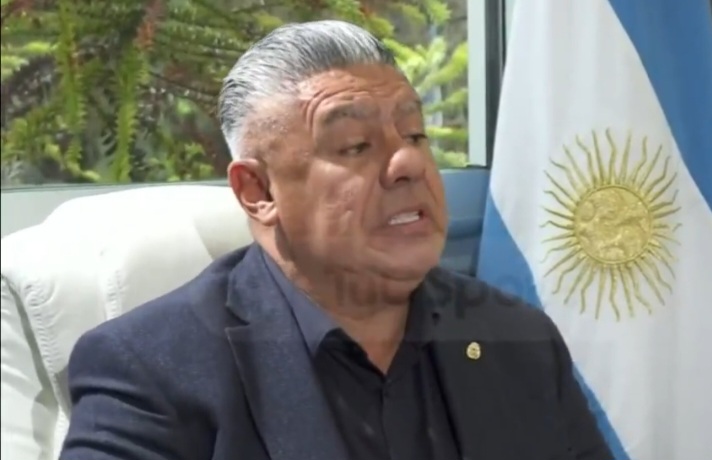
Claudio Tapia, aware of the pressure and criticism, has sought to project authority. He recently stated that he intends to continue for many more years as AFA president. Tapia traveled to Lima for the Copa Libertadores final and will attend the World Cup draw in Washington on December 5. He continues to rely heavily on the National Team project, including its youth development structure, as the foundation of his leadership.

Pablo Toviggino, one of the strongest figures within the federation, remains central in the conflict. He maintains a combative presence on social media and frequently responds directly to critics, including Verón and President Milei. His role continues to be influential both internally and publicly.

Supporters across Argentina have expressed growing frustration with the series of controversies. Despite the success of the National Team in recent years, fans have voiced concerns about refereeing, rule changes, and the general credibility of the domestic competition. Many view the Central title decision as another example of inconsistency.

Most clubs in the lower divisions have publicly supported the AFA, reaffirming their alignment through official statements. First Division clubs have also avoided confrontation, accepting Central’s title and remaining silent on refereeing issues. Even leaders who previously spoke out, such as Talleres president Andrés Fassi, have stepped back from public criticism, opting to avoid escalation.

As the dispute continues, the AFA appears determined to maintain its position. The federation retains strong internal organization and operational control, while Verón, the national government, and a significant portion of supporters remain on the opposite side. The situation shows no signs of easing, and the political and institutional landscape of Argentine football remains unsettled.